
Ask anyone who has walked the same patch of eastern woods in July and again in January: it is not the same place. In summer, the canopy and understory hide almost everything beyond a few dozen yards. In winter, the leaves are down, the brush thins, and the ground itself starts talking. Rock outcrops, old roadbeds, property-line walls, cellar holes and drainage lines that were invisible in August suddenly stand out.
For treasure hunters, that makes the stretch from late November into early spring one of the most useful times to scout. It also brings short days, cold, wet ground and hunting seasons. This field guide covers how to use leaf-off season well.
What leaf-off reveals
Bare trees change three things for a searcher.
Terrain you can actually read
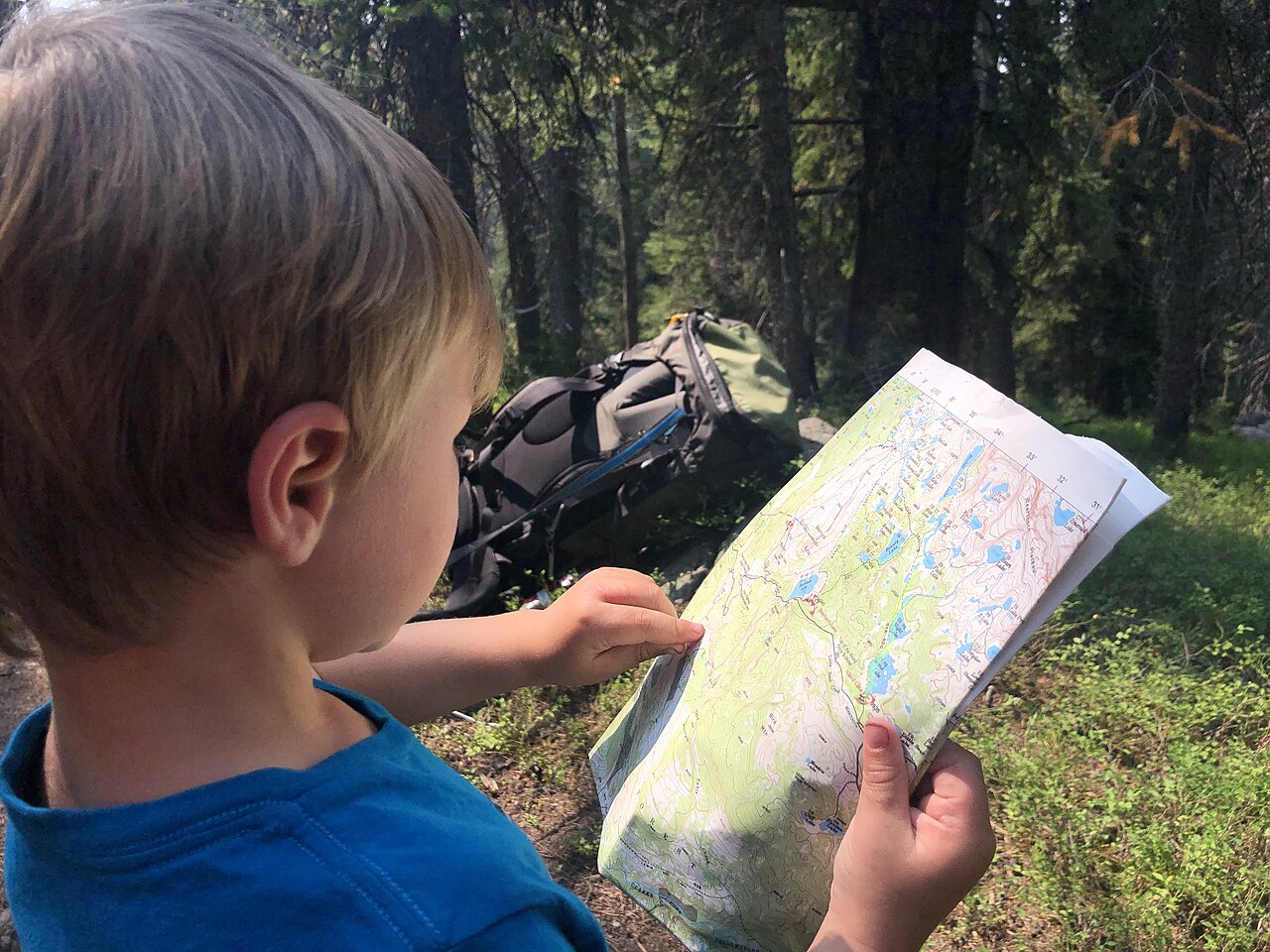
Contour lines on a topo map describe shape; leaf-off lets you see it. Benches on a slope, small saddles, gullies and the true line of a ridge become visible from a distance. If you have been working a poem or clue that points to a landform, this is the season to check whether the real ground matches your map. Our guide to reading maps and terrain covers the tools for translating a topo into what you see on the hillside.
Human traces
Old homesites, stone walls, rock piles, abandoned road traces, fence lines with wire grown into trees, and the regular spacing of old plantings all show better in winter. Many of these features are what a hunt author might use as a reference point, and many are what a searcher misreads as one. Leaf-off is the time to map them carefully and test whether they fit the clue or just look interesting.
Sightlines
Some clues depend on what you can see from a spot. In summer, the view is a wall of green. In winter, you can test whether a landmark is visible from a candidate location. Note, though, that a hunt hidden in summer may have been designed around summer conditions. A sightline that only exists in January may not be the one the author intended.
Scout now, search smart
Leaf-off season is excellent for reconnaissance even when it is not the best time for a full search.
- Walk the area with a camera. Photograph features from known positions and log GPS coordinates. Those photos are a reference all year.
- Compare against your maps. Mark features you find that are not on the topo, and features on the topo you could not find.
- Note access. Where are the gates, posted signs, parking areas and property lines? What looked like public woods on a satellite image may not be.
- Rule areas out. A clean, documented “not here” is real progress. Our piece on field search methods explains how to grid an area so you know what you have covered.
Short days change the plan
In December, daylight is the scarcest resource on a search. Work backward from sunset, not forward from when you arrive.
- Set a turnaround time that gets you back to the vehicle with daylight to spare, and keep it even if you feel close.
- Carry a headlamp and spare batteries on every winter outing.
- Expect slower travel. Wet leaves on slopes are slippery, and leaf litter hides holes, rocks and stumps.
- Tell someone your plan: where you are parking, your route and when you expect to be out.
Cold and wet are the real hazards
The National Weather Service explains that hypothermia occurs when the body loses heat faster than it can produce it. Searchers are especially exposed because the work is stop-and-go: a hard climb that soaks a base layer with sweat, followed by an hour standing still at a promising site.
- Dress in layers you can adjust, with a dry spare layer in your pack.
- Avoid cotton next to the skin; it holds moisture.
- Keep extremities covered. The NWS notes that uncovered skin, hands and feet are most prone to frostbite.
- Eat and drink regularly. Cold weather suppresses thirst.
- Watch the forecast for wind and precipitation, not just temperature.
Our full safety, gear and law guide has a complete packing list.
Hunting season is search season too
Much of the land that attracts searchers in winter also attracts hunters. Before any outing, check the hunting season dates and rules for the specific land you are visiting, whether national forest, state game land or private property. Wear blaze orange where hunting is allowed, stay on visible routes when you can, and avoid moving quietly through thick cover at dawn and dusk.
Respect the ground and the rules
Leaf-off makes it tempting to probe every interesting feature. Remember:
- Permission comes first. Private land requires the owner’s permission. Public land has its own rules about digging, metal detecting and disturbing the ground, and those rules vary by agency.
- Historic features are not treasure. Old foundations, cemeteries, rock walls and artifacts may be protected, and they belong in place. Document, don’t disturb.
- Leave no trace. Fill anything you open, pack out what you carry in, and leave gates as you found them.
- Follow each hunt’s rules. Many hunts publish rules about where a cache is not hidden, such as on private property or in dangerous places. If your theory requires breaking a hunt’s own rules, revisit the theory.
A winter scouting checklist
- Maps marked with candidate areas and access points
- Turnaround time set and shared
- Headlamp, spare batteries, phone charged, offline maps downloaded
- Layers, hat, gloves, dry spare
- Water and food
- Blaze orange if hunting is allowed
- Camera and a notebook or log for features and coordinates
- Permission confirmed and land rules reviewed
Use the season, don’t force it
Winter rewards patience. Scout broadly, document carefully, and save the risky climbs and long days for when the weather and daylight are on your side. The notes you take in January can make your first spring search much shorter.
For hunt-specific planning, see the Appalachian Trail Field Atlas and our search techniques library.
Leave a Reply